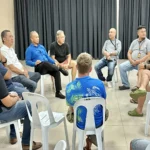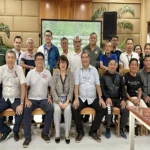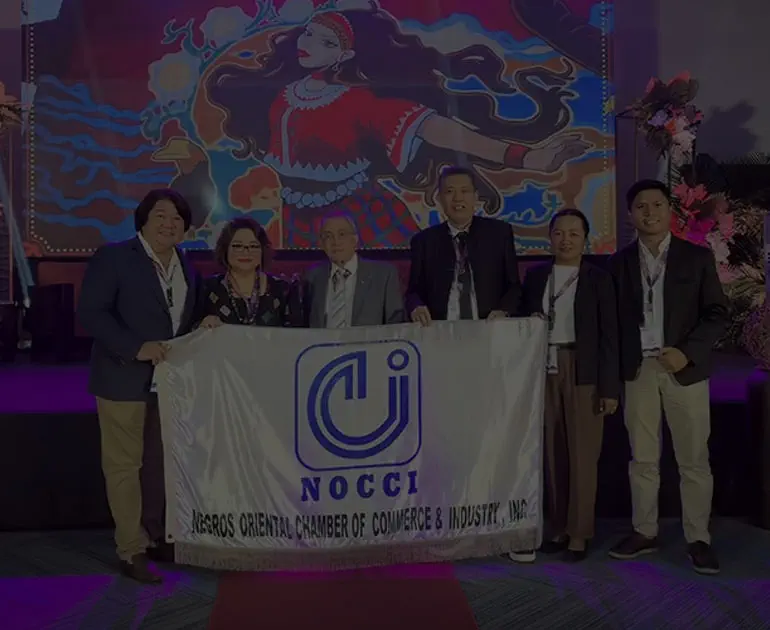


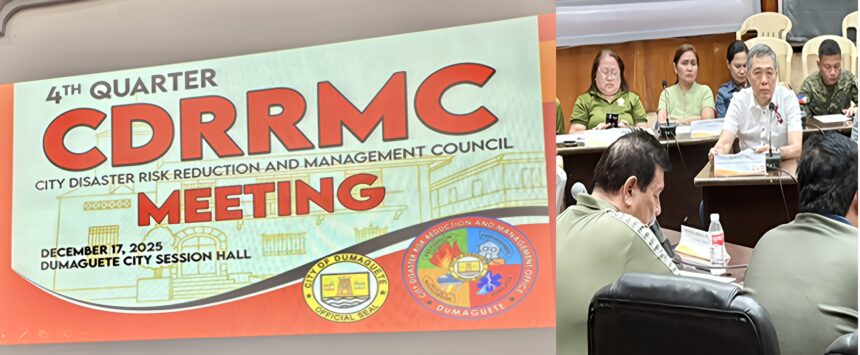
Officers of the Negros Oriental Chamber of Commerce and Industry (NOCCI), led by President Edward C. Du, attended the 4th Quarter City Disaster Risk Reduction and Management Council (CDRRMC) Meeting in Dumaguete City to reinforce collaboration between the business sector and local government. The meeting focused on preparedness, coordinated response, and long-term Resilience in the face of natural and man-made hazards. For businesses, communities, and policymakers in Dumaguete and Negros Oriental, the key takeaway is clear: disaster readiness is no longer optional, and private sector participation is essential.
Why the CDRRMC Meeting Matters for Dumaguete City
The City Disaster Risk Reduction and Management Council plays a central role in planning and coordinating disaster preparedness and response efforts in Dumaguete City. Quarterly meetings allow stakeholders to review risk assessments, evaluate response capabilities, and align priorities across sectors.
For a highly urbanized coastal city like Dumaguete, exposure to typhoons, flooding, earthquakes, and public health emergencies makes Resilience a strategic necessity. The presence of NOCCI officers signals recognition that economic stability and disaster readiness are closely linked.
The Role of NOCCI in Local Disaster Preparedness
NOCCI represents a wide range of enterprises, from small local businesses to large institutions. By participating in the CDRRMC meeting, NOCCI strengthens the bridge between the private sector and local government units.
This involvement supports Resilience by ensuring that business concerns, operational realities, and supply chain risks are considered in disaster planning. It also helps businesses align their own continuity plans with city-level strategies.
Key Focus Areas Discussed During the Meeting
The 4th Quarter CDRRMC Meeting addressed several priority areas relevant to both public safety and economic continuity.
Risk Assessment and Preparedness Planning
Updated hazard maps, vulnerability assessments, and seasonal risk outlooks were reviewed. These tools guide evacuation planning, infrastructure protection, and early warning systems. For businesses, understanding these risks supports informed decisions on location planning, insurance, and workforce safety, all of which contribute to long-term Resilience.
Coordination Between Public and Private Sectors
Effective disaster response depends on coordination. The meeting emphasized communication protocols, resource-sharing mechanisms, and rapid decision-making frameworks. NOCCI’s participation enhances Resilience by enabling faster information flow between city authorities and the business community during emergencies.
Business Continuity and Economic Stability
Disasters disrupt livelihoods as much as they threaten lives. Discussions highlighted the importance of keeping essential services, supply chains, and local enterprises operational during crises. Business continuity planning, when aligned with city response plans, reduces recovery time and strengthens overall Resilience.
Why Business Sector Participation Is Critical
Private enterprises control significant resources, infrastructure, and expertise. Their engagement in disaster governance improves planning accuracy and response capacity.
Shared Responsibility for Community Safety
Disaster preparedness is a shared responsibility. When businesses participate in planning and drills, they help protect employees, customers, and surrounding communities. This shared approach builds social and economic Resilience beyond government-led initiatives.
Faster Recovery After Disasters
Communities with strong public–private collaboration recover faster. Businesses that are prepared can resume operations sooner, support employment, and contribute to local recovery efforts. NOCCI’s involvement reinforces Resilience by aligning recovery priorities across sectors.
Implications for Dumaguete and Negros Oriental
The attendance of NOCCI officers at the CDRRMC meeting reflects a broader shift toward inclusive disaster governance in Negros Oriental. As climate risks and urban pressures increase, cities that integrate business leaders into disaster planning are better positioned to adapt.
For Dumaguete City, this collaboration enhances Resilience by strengthening preparedness, reducing economic disruption, and promoting sustainable development even in the face of recurring hazards.
What This Means for Local Businesses
Local enterprises can draw practical lessons from NOCCI’s participation.
Align Internal Plans with City Strategies
Businesses should review their own emergency and continuity plans to ensure alignment with city protocols. Doing so improves coordination during actual events and contributes to shared Resilience.
Stay Engaged Through Business Organizations
Active participation in chambers of commerce and industry groups provides access to timely information, training, and coordination opportunities. Engagement strengthens individual business preparedness while reinforcing collective Resilience.
NOCCI’s participation in the 4th Quarter Dumaguete City CDRRMC Meeting highlights the growing role of the private sector in disaster preparedness and governance. Led by President Edward C. Du, the chamber’s involvement supports stronger coordination, informed planning, and faster recovery for the city. As Dumaguete and Negros Oriental continue to face evolving risks, sustained collaboration between government and business will remain a cornerstone of community Resilience.