

NOCCI Strengthens Business Partnerships and Advances Save Mt. Talinis Advocacy
Empowering Local Commerce Through Strategic Alliances
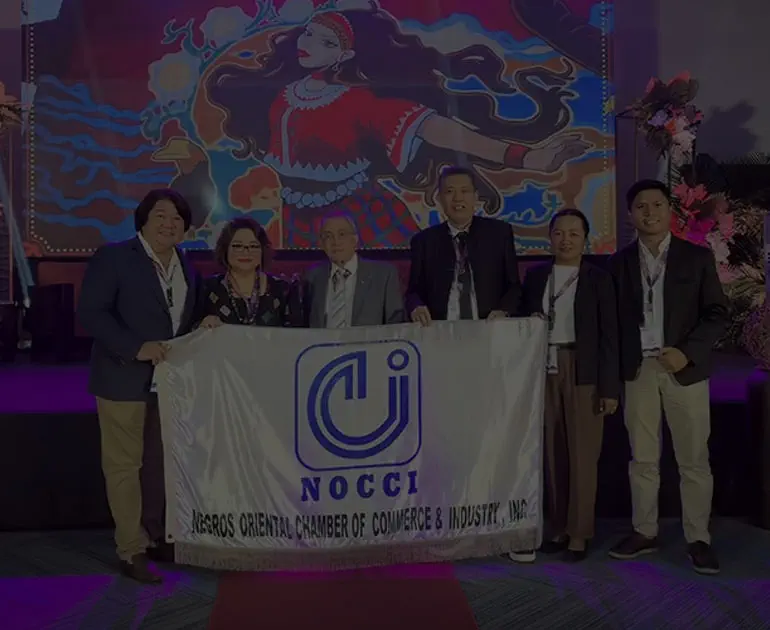
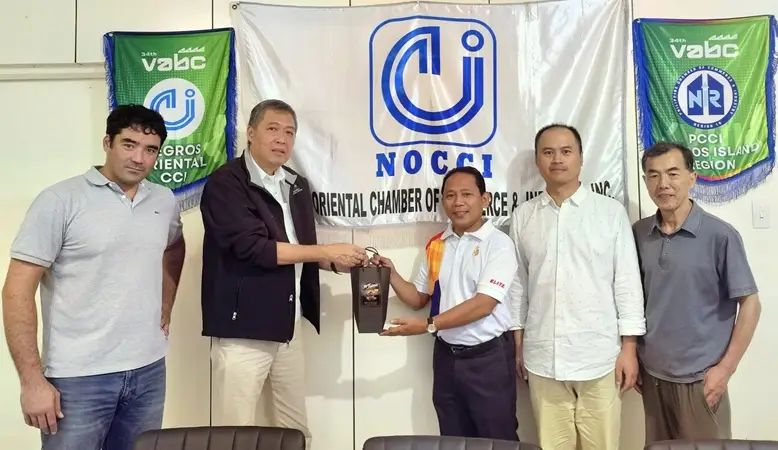
The Negros Oriental Chamber of Commerce and Industry (NOCCI), under the leadership of President Edward Du, continues to take major strides in boosting the province’s economic potential. In a recent series of high-level meetings, NOCCI engaged with prominent business leaders, investors, and local institutions to forge stronger partnerships for sustainable economic growth. These initiatives underscore NOCCI’s commitment to making Negros Oriental a competitive, investor-friendly province that balances progress with environmental stewardship through its Save Mt. Talinis advocacy.
NOCCI’s discussions involved core members such as the Perpetual Help Community Cooperative (PHCCI) and the Bank of the Philippine Islands (BPI) Dumaguete Branch, both known for their vital roles in supporting local entrepreneurs and small-to-medium enterprises (SMEs). This collaboration aims to create a more accessible financial ecosystem for businesses in Negros Oriental.
Collaboration with Chinese Investors and Montenegro Bay Executives

Another significant highlight was NOCCI’s engagement with top executives from Montenegro Bay, a key player in regional tourism and marine transport. The discussions focused on developing joint ventures and investment frameworks to enhance infrastructure, trade, and tourism connectivity across Negros Oriental.
These international and inter-regional collaborations not only expand the province’s economic landscape but also position Dumaguete and surrounding municipalities as emerging investment hubs in the Visayas. Through the Save Mt. Talinis initiative, NOCCI ensures that while industrial and commercial growth continues, environmental balance remains a guiding principle.
Driving Inclusive Growth and Sustainability
NOCCI’s leadership recognizes that true development requires inclusive participation. By fostering partnerships between local businesses and international investors, the chamber promotes job creation, technology exchange, and skill development among local workers. These efforts align with Negros Oriental’s long-term goal of building a resilient and inclusive economy.
At the heart of NOCCI’s mission is its Save Mt. Talinis advocacy — a powerful example of how business and environmental protection can go hand in hand. The organization’s Mt. Talinis Dark Chocolate Cacao Project exemplifies this dual vision, as it not only generates livelihood opportunities for farmers but also promotes sustainable agriculture and forest preservation.
The Mt. Talinis Dark Chocolate Cacao Project
The Mt. Talinis Dark Chocolate Cacao Project is one of the most innovative sustainability efforts in the region. By encouraging cacao cultivation on the slopes of Mt. Talinis, NOCCI and its partners provide local farmers with a profitable and eco-friendly alternative to destructive agricultural practices. This initiative under the Save Mt. Talinis program empowers rural communities to protect biodiversity while enhancing their economic independence.
The project has also caught the attention of private investors and local tourism promoters who see potential in eco-agriculture as a growth driver. As cacao farming gains traction, it could evolve into a regional specialty product that highlights Negros Oriental’s dedication to both quality and conservation.
Public-Private Synergy for Economic and Environmental Resilience
Through continuous engagement with partners like PHCCI, BPI, and Montenegro Bay, NOCCI is fostering an ecosystem where financial empowerment, sustainability, and innovation intersect. This synergy extends beyond boardrooms and business summits — it reaches communities, upland farmers, and local entrepreneurs who directly benefit from initiatives like Save Mt. Talinis.
By combining the strengths of the private sector with the advocacy-driven focus of civic organizations, NOCCI is setting a precedent for how regional commerce can thrive without compromising environmental integrity. This balanced approach ensures that Negros Oriental’s growth remains responsible, equitable, and forward-looking.
Strengthening the Province’s Investment Appeal
Negros Oriental’s potential as a business destination continues to rise. The province offers a strategic location, access to skilled labor, and growing infrastructure support. Through NOCCI’s proactive engagement with investors, the local business climate becomes increasingly attractive for both domestic and international capital.
In line with this, the Save Mt. Talinis campaign reinforces the province’s image as an environmentally responsible investment zone. Companies seeking to align with green standards and corporate social responsibility find in Negros Oriental a region that values both profit and preservation.
A Unified Vision for the Future
President Edward Du and the NOCCI leadership envision a future where Negros Oriental stands as a model for sustainable progress. Their ongoing partnerships with financial institutions, foreign investors, and local cooperatives illustrate the chamber’s capability to navigate both economic and ecological challenges effectively.
The continued expansion of the Save Mt. Talinis initiative further amplifies NOCCI’s legacy as a champion of balanced growth. By integrating environmental protection into every business strategy, NOCCI ensures that future generations will inherit a province that is not only prosperous but also green and thriving.
Conclusion: Building a Legacy of Sustainable Prosperity
NOCCI’s recent efforts reflect a broader transformation — one where economic vitality coexists with environmental consciousness. Its proactive partnerships, investment facilitation, and support for the Save Mt. Talinis movement signal a strong commitment to responsible development.
As Negros Oriental advances, the province stands as a beacon for others seeking to harmonize business progress with ecological responsibility. Through initiatives like the Mt. Talinis Dark Chocolate Cacao Project and its continuous investor collaborations, NOCCI proves that the future of commerce lies not just in growth, but in growth that sustains.