


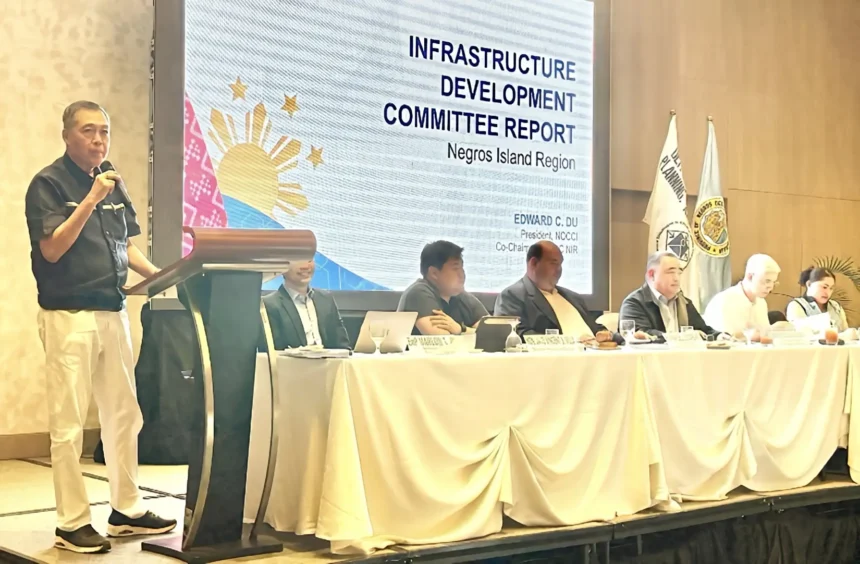
At a time when public spending efficiency is under close scrutiny, a proposal from Negros Oriental business leader Edward Du is drawing attention across regional planning circles. Du, President of the Negros Oriental Chamber of Commerce and Industry (NOCCI) and Co-Chair of the Regional Development Council (RDC) Infrastructure Development Committee, is pushing for stronger RDC authority in shaping regional infrastructure priorities. Speaking at the 4th Quarter NIR RDC Full Council Meeting in Bacolod City, he outlined a framework that places RDCs at the center of evaluating and endorsing infrastructure projects before they reach the National Expenditures Program (NEP). For policymakers and local governments, the proposal offers a practical path toward more transparent, aligned, and accountable infrastructure investment.
The Core Proposal: Strengthening RDC Authority
Du’s proposal calls for empowering Regional Development Councils to play a decisive role in infrastructure planning across municipal, provincial, and regional levels. Specifically, he recommended that no infrastructure project be included in the NEP without prior RDC endorsement. This approach positions RDCs as gatekeepers that ensure projects align with regional development plans and actual needs. By strengthening RDC authority, the process becomes less vulnerable to fragmented decision-making and last-minute budget insertions. The proposal reflects a broader shift toward evidence-based and regionally coherent infrastructure governance.
Why Infrastructure Vetting at the Regional Level Matters
Regional-level vetting addresses long-standing weaknesses in public infrastructure planning. Without a strong filtering mechanism, projects can be proposed that duplicate existing assets, fail to meet technical standards, or serve narrow interests. RDC involvement introduces a multi-sector review process that considers economic impact, social value, and feasibility. This reduces the likelihood of misaligned infrastructure that strains public resources without delivering proportional benefits. In regions with diverse local government units, coordinated infrastructure planning is essential to maximize returns on public investment.
Preventing Ghost Projects and Budget Distortions
One of the most critical issues highlighted by Du is the persistence of ghost projects and unauthorized budget insertions. These projects often appear late in the budgeting cycle, bypassing technical review and public consultation. By requiring RDC endorsement, such infrastructure proposals would need to pass through a transparent evaluation process. This adds a layer of accountability that discourages politically motivated or poorly designed projects. Over time, this could significantly improve public trust in the infrastructure budgeting process.
The Role of Clear Guidelines and Technical Capacity
Empowering RDCs is not only about authority but also about capability. Du emphasized the need for clear evaluation guidelines to standardize how infrastructure projects are assessed across regions. These guidelines would cover technical feasibility, cost-effectiveness, and alignment with development plans. In parallel, technical capacity building within RDCs is essential to ensure informed decision-making. With stronger analytical tools and trained personnel, RDCs can make infrastructure recommendations that withstand both political and technical scrutiny.
Participatory Planning as a Safeguard
Another key pillar of the proposal is participatory planning. Involving local governments, business groups, and civil society in infrastructure discussions helps surface real-world needs and risks early. This collaborative approach reduces the gap between national budgeting priorities and local realities. It also encourages shared ownership of infrastructure outcomes, making implementation smoother. Participatory mechanisms ensure that infrastructure decisions are not made in isolation but reflect collective regional priorities.
Endorsement and Next Steps at the National Level
The proposal was formally endorsed to national line agencies during the RDC meeting. Feedback from these agencies will be consolidated and reviewed in the next RDC session, marking the beginning of a consultative refinement process. This step is crucial to align the proposed RDC role with existing national budgeting frameworks. If adopted, the policy could reshape how infrastructure projects enter the NEP across the country. The process underscores the importance of dialogue between regional bodies and national institutions.
Implications for Long-Term Infrastructure Governance
If implemented, the proposal could set a precedent for more disciplined infrastructure governance nationwide. Stronger RDC involvement would encourage long-term planning over short-term political considerations. It would also improve coordination among agencies responsible for planning, funding, and implementation. For regions like Negros Island, this could translate into infrastructure projects that are more resilient, inclusive, and economically impactful. Ultimately, the goal is a public investment system where infrastructure spending consistently delivers measurable development outcomes.
Toward Smarter Infrastructure Decisions
Edward Du’s call to empower RDCs reflects a growing recognition that better infrastructure outcomes require better governance structures. By placing regional councils at the center of project evaluation and endorsement, the proposal addresses systemic gaps that have long affected public spending quality. The next step lies in refining the framework through national agency feedback and formal policy adoption. For stakeholders, the message is clear: smarter infrastructure begins with transparent, regionally grounded decision-making that prioritizes long-term value over short-term gains.