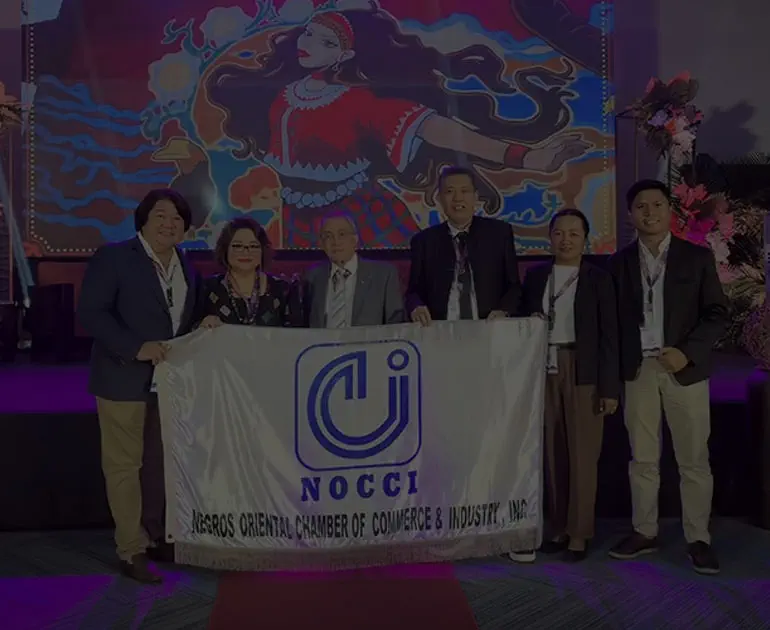



The Negros Oriental Chamber of Commerce and Industry (NOCCI) officers led by President Edward Du, presented its position paper on the proposed DPWH Looc-Piapi Shoreline Protection Project during the regular session of the Dumaguete Sanggunian Panglunsod. This key development marks a significant step forward in protecting the city’s coastal ecosystem and enhancing its resilience against environmental risks.
NOCCI Backs Looc-Piapi Shoreline Protection Project in Dumaguete Council Session
The Negros Oriental Chamber of Commerce and Industry (NOCCI), led by its President Edward Du, took a proactive stance in advocating for environmental resilience by formally presenting its position paper on the proposed Looc-Piapi Shoreline Protection Project during a regular session of the Dumaguete City Sanggunian Panglunsod.
This significant engagement highlights NOCCI’s growing role not only in economic development but also in environmental advocacy. The Looc-Piapi Shoreline Protection Project, initiated by the Department of Public Works and Highways (DPWH), aims to fortify the city’s coastal defenses against erosion, flooding, and climate-related threats, while preserving marine biodiversity.
In his presentation to the council, President Du underscored the project’s strategic importance for Dumaguete City, pointing out its potential to safeguard both economic and ecological assets. “The coastal zone from Looc to Piapi is not only a residential and recreational area—it is a critical barrier against rising sea levels and storm surges. We commend the DPWH for taking a forward-looking approach with the Looc-Piapi Shoreline Protection Project,” Du stated.
NOCCI’s position paper outlined specific recommendations for ensuring that the project is implemented with careful environmental planning and in consultation with affected communities. The chamber emphasized that long-term sustainability and inclusive development must guide all phases of the Looc-Piapi Shoreline Protection Project, from engineering design to community engagement and post-construction maintenance.
Stakeholders from both the public and private sectors were present during the session, including city officials, environmental advocates, urban planners, and business leaders. The chamber’s participation signals a collaborative shift in how infrastructure projects are discussed—placing equal weight on environmental, social, and economic factors.
In particular, NOCCI called for rigorous environmental impact assessments and urged the local government to ensure transparency in the selection of contractors and implementation partners. “We believe this project can serve as a model for climate-resilient infrastructure if it is executed with integrity, innovation, and inclusive participation,” said Du.
The Looc-Piapi Shoreline Protection Project is expected to include a combination of engineered sea walls, mangrove restoration, and public access spaces that promote eco-tourism and community recreation. NOCCI praised this integrative approach and encouraged local planners to include green engineering techniques that complement natural ecosystems.
During the session, concerns were raised about the potential displacement of informal settlers and the impact on local livelihoods. In response, NOCCI proposed the formation of a multi-sectoral oversight committee to ensure that these concerns are addressed proactively. The committee, as envisioned, would monitor the progress of the Looc-Piapi Shoreline Protection Project and provide a platform for continuous stakeholder dialogue.
NOCCI Executive Director John Jalandoni also weighed in on the importance of public-private collaboration in implementing such large-scale infrastructure. “No single entity can address the scope of coastal protection alone. Through the Looc-Piapi Shoreline Protection Project, we have the opportunity to demonstrate how collective action can build climate resilience and protect community welfare,” Jalandoni said.
Experts have warned that Dumaguete City remains highly vulnerable to the effects of climate change, particularly sea level rise and extreme weather events. The Looc-Piapi Shoreline Protection Project is therefore seen as a timely and necessary investment in disaster risk reduction and urban sustainability.
NOCCI’s push for the project aligns with its broader advocacy to support development initiatives that balance economic growth with ecological integrity. Over the years, the chamber has expanded its scope beyond commerce to become a key voice in policy development, infrastructure planning, and community welfare.
As the Dumaguete City Council prepares to deliberate on the project’s approval and implementation framework, the support of groups like NOCCI will be crucial in securing funding, public trust, and long-term project viability. President Du concluded the chamber’s presentation with a call for shared responsibility: “Let us protect what protects us. The Looc-Piapi Shoreline Protection Project is not just a government initiative—it is a community lifeline.”
With the support of NOCCI and other stakeholders, the project is poised to become a flagship model of sustainable urban planning in Negros Oriental. As Dumaguete moves forward, the success of the Looc-Piapi Shoreline Protection Project may well define the city’s ability to adapt, thrive, and lead in coastal resilience.